janeitasingh


In my journey with literary criticism based on the belief ‘critic as an artist’, my writing hopes to generate new perspectives of ways of seeing. With my interest in interdisciplinary research, I endeavour to morph inquiry into a webbed storytelling format to reach the general and inquisitive reader. The illustrated monograph, FN Souza: The Archetypal Artist, is my non-fiction book based on a 12-year research project (Niyogi Books, Simon & Schuster). It explores the loss and recovery of the self in postcolonial, post-war and post-modernist times, with an emphasis on posthumanism. The book is held in the collections of Tate Britain, the Victoria & Albert Museum, the University of Oxford, the University of Cambridge, the Library of Congress, the Museum of Modern Art (MoMA), the Metropolitan Museum of Art (The Met), and Stanford University.
Yale University, Columbia University, University of Pennsylvania, Princeton University, New York University, UC Berkeley, The Frick Art Research Library, The Cleveland Museum of Art, Peabody Essex Museum(PEM), the Paul Mellon Centre, the Courtauld Institute of Art, Carleton & St Olaf College Libraries, Michigan State University, Connecticut College, Kristine Mann Library in New York, The State Library of New South Wales, Louvre Abu-Dhabi, and the Getty Museum, among others. It has been awarded the Oxford (Bookstore) Art Book Prize 2025.
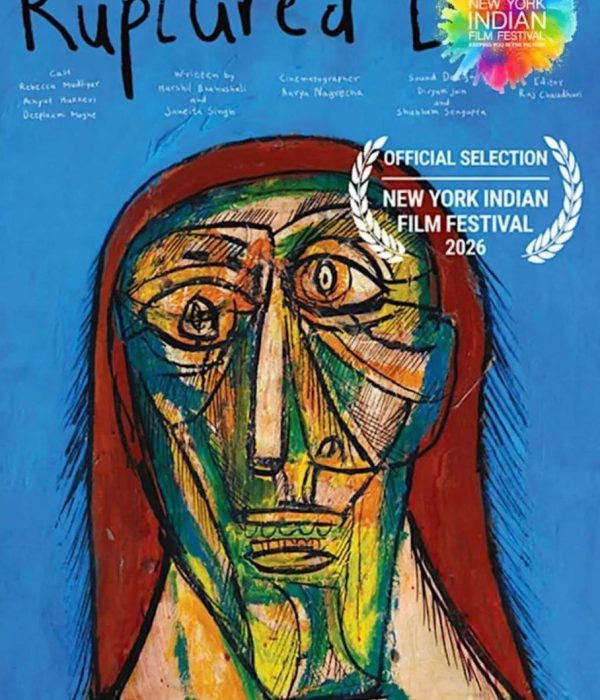
I am the writer of the documentary Ruptured Lines, about Souza’s art practice. Recently, the Society of Art and Cultural Heritage of India invited me to give a presentation on my book at the Palo Alto Art Centre, San Francisco. A podcast on my work was released in January 2026 under the aegis of the Carl Jung Institute of San Francisco, and a feature is forthcoming in Quadrant, the journal of the C.G. Jung Foundation, New York (Summer 2026). I have curated talks on contemporary arts – Raza Dialogues, with Raza Foundation, Delhi and the Museum of Goa. I delivered presentations on the artist FN Souza at the Serendipity Art Festival, 2017-18. In 2019, I gave a talk on FN Souza at the exhibition, Souza in the 40s, at Sunaparanta Centre of the Arts. I hosted the weekly Live Show, Embodying Light and Shadow at the Embodiment Conference 2021. My critical writing has been published in Art India, Take on Art magazine, Indian Literature, DAG-Iconic, and various anthologies. My talk on Krishen Khanna’s centenary, critical writings on the American artist Waswo X Waswo, and the Scottish artist Olivia Fraser has garnered much appreciation in art circles.
I am a registered researcher at the Asian Division of the Library of Congress, Washington DC, The Met Museum and The Frick Art Research Library, New York.
I live in Goa with my mother, husband, and son on the banks of the river Zuari, where the river meets the sea under a multi-hued sky.
Breaking Boundaries
“Art criticism that dares to speak and weave new perspectives.”

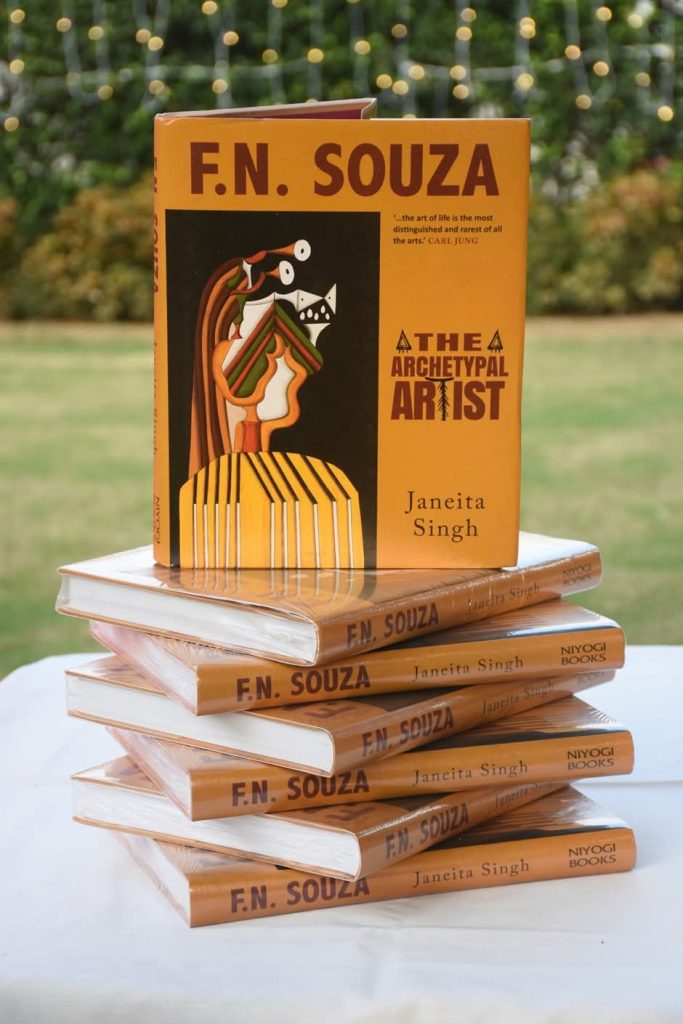
The book is a feminist reading of Souza’s art with an equal emphasis on its study through a Jungian lens and East-West philosophy. Begun in the first half of the last century, Souza’s radical art has more impact than ever today. Many of Souza’s concerns, about the disregarded feminine principle, lack of free human consciousness, and transpersonal psychology are being addressed. Today when embodiment practice has caught on at the world stage in fields of health, trauma and creativity, Souza’s vision has finally materialized
Preface I had often heard collectors of FN Souza’s works say that while Souza was the most brilliant Indian modernist, they couldn’t buy his artwork to hang in their living rooms. Souza’s works mostly lie wrapped up in attics. No public gallery in Goa displays them. Souza is well known in Bombay and Delhi, but the rest of India is unaware of his artistic legacy. The secondary markets in India & Europe sustain his art, but more for its asset value. There is something very visceral and primordial about his work; many people would like to engage with it, but an uncanny unease fills them whenever they try, and they shy away. The questions that drove me in the beginning were:
Why is Souza’s art uneasy on the eye?
What triggers, provokes and horrifies us when we see Souza’s art? Why?
The ‘uneasy space’ in Souza’s art became my raison d’ être. The more I embraced it, the more secrets were revealed to me about the human mind-body-spirit, the collective unconscious, and the cultural baggage attached to it.
Jean Paul Sartre said, “Hell is other people”. But Souza’s art laid bare the ‘hell inside human beings’ – dark recesses of the human unconscious. Souza questioned citadels of power, and the deep cleft between binaries such as mind & body, sacred & profane and morality & judgment. His life & art are a fine example of embracing disregarded myths in our collective consciousness. For me, it was interesting to investigate how the ‘individuation’ process (as described by Carl Jung) unconsciously helped Souza realise his artistic vision.
It is disappointing that there is very little primary literature on Souza. A contextual study of his autobiography, interviews, and artworks opens the door to a library of literature on related topics by art historians, philosophers, and psychologists. Writings by feminist writers such as Muddupalani, Dora Marsden, Margaret Atwood, and others made me aware of the sexual yet emancipated woman on Souza’s canvas.
Walt Whitman’s magnum opus, ‘Leaves of Grass’, helped decode Souza’s celebration of the human body in his figurative art series, whereas Stella Kramrisch’s writings on Indian arts and temples unlayered the Eastern symbolism in Souza’s art. A comparative study with Ukiyo-e , the Shunga series from Japan, folded into a symphony of love and sexuality, not to mention the comparative notes between Souza’s figurative art & William Masters and Virginia Johnson’s research project on sexual physiology (Netflix series).
Deleuze & Guattari’s chronicles of Bacon’s work establish cross-connections with the sensation in Souza’s grotesque series, whereas a look at Souza’s art through a Jungian lens clarifies his call to humans for individuation and wholesomeness, rather than perfection (that is, for the Gods).
My essays are a critical study of Souza’s life and art. The mark of a great artist is the ability to map uncharted territory – to go into zones of silence and come back with something to say. Kafka put it succinctly, “Prayer and art are passionate acts of will. Art like prayer is a hand outstretched in the darkness, seeking for some touch of grace which will transform it into a hand that bestows gifts.”
In Souza’s art, the gift is the unflinching acknowledgement of the human body, rescued from the supremacy of mind over body and from the traditions of sins of the flesh. One may be able to capture reality more thoroughly than science; to see living beings and their nature through the eyes of the soul, without recoiling in horror, disgust or shame. The human body, cloaked in ambiguity – caught between the sacred and the profane now stands unleashed through Souza’s stark renditions on his canvas.
Rooted in the body, equally fascinating is Souza’s search for the numinous in his ‘Head series’ and self-portraits. Secondly, the essays examine the cultural milieu in which he grew up and its influences. Souza grew up in a confluence of great cultures, primarily the Christian (Lusophone & Anglophone) and the Hindu way of life. Though he had grown up with myths from varied cultures, none of them, in itself, fulfilled him. Just as Jung found the Alchemical myth a richer & more complete continuation of the Christian myth, Souza sought an amalgamation of myths, drawing upon the resources of the collective unconscious to complete what had gone missing in the myths. Collating Eastern and Western philosophy, he remodelled human figures and heads on his canvas, creating an alternative consciousness and a new way of life.
Lastly, there is the examination of Souza’s life through a Jungian lens. What intrigued me was that a 16-year-old young (boy) artist had arrived at such emancipated figures and heads on his canvas. He invented a new (strong & formidable) woman on his canvas, unparalleled in art history, when boys at this age are so conflicted about their own sexuality against a psychotic grid of didactic parental scripts, claustrophobic socio-cultural mappings, childhood trauma, brutal religious and state machinery and mangled human instincts. The Jungian individuation process had begun, and Souza’s Anima was actively guiding him to tap into his unconscious through dream work and active imagination.
My approach to the subject
This book is a feminist reading of Souza’s art, with equal emphasis on its study through a Jungian lens and on Eastern–Western philosophy. Begun in the first half of the last century, Souza’s radical art has more impact than ever today. Many of Souza’s concerns about the disregarded feminine principle, the lack of free human consciousness, and transpersonal psychology are being addressed. Today, as embodiment practice has caught on on the world stage in the fields of health, trauma and creativity, Souza’s vision has finally materialised.
Readers will embark on a quest to understand the human body and sexuality, and the power vested therein—a subject of stigma for centuries due to incessant friction with our social and spiritual values.
As collective consciousness begins to embrace the Apollonian/Dionysian duality, the celebration of the human component in Souza’s art, in its reach for the numinous, becomes entirely relevant. Un-layering the shocking libido and grotesque in his art, viewers will develop the art of difficult dialogue with themselves and others, an exercise in polytheism and topical movements such as embodiment and authentic relating.
By collating Eastern and Western philosophies, viewers will comprehend the undimmed concentration that radiates from Souza’s art, paving the way for healthy sexuality and a balanced way of life. Emancipated bodies and liberated human consciousness, for example, in his Figurative and Head series on his canvas, code a society made up of sovereign individuals. Souza’s art depicts a social revolution in the making, which exposes the ongoing identity/sexual/gender crisis in contemporary society.
A dawning comfort zone with Jung’s concept of unconscious and transpersonal psychology will help viewers bring an unprejudiced eye to Souza’s artwork. Souza mined images from his personal unconscious, overlaying a grid of the collective unconscious. Shadows dance on his canvases. Everything that human society had repressed and rejected is given full-blown coverage in his paintings, along with an exploration of multivalent archetypes.
Pages from the Book